

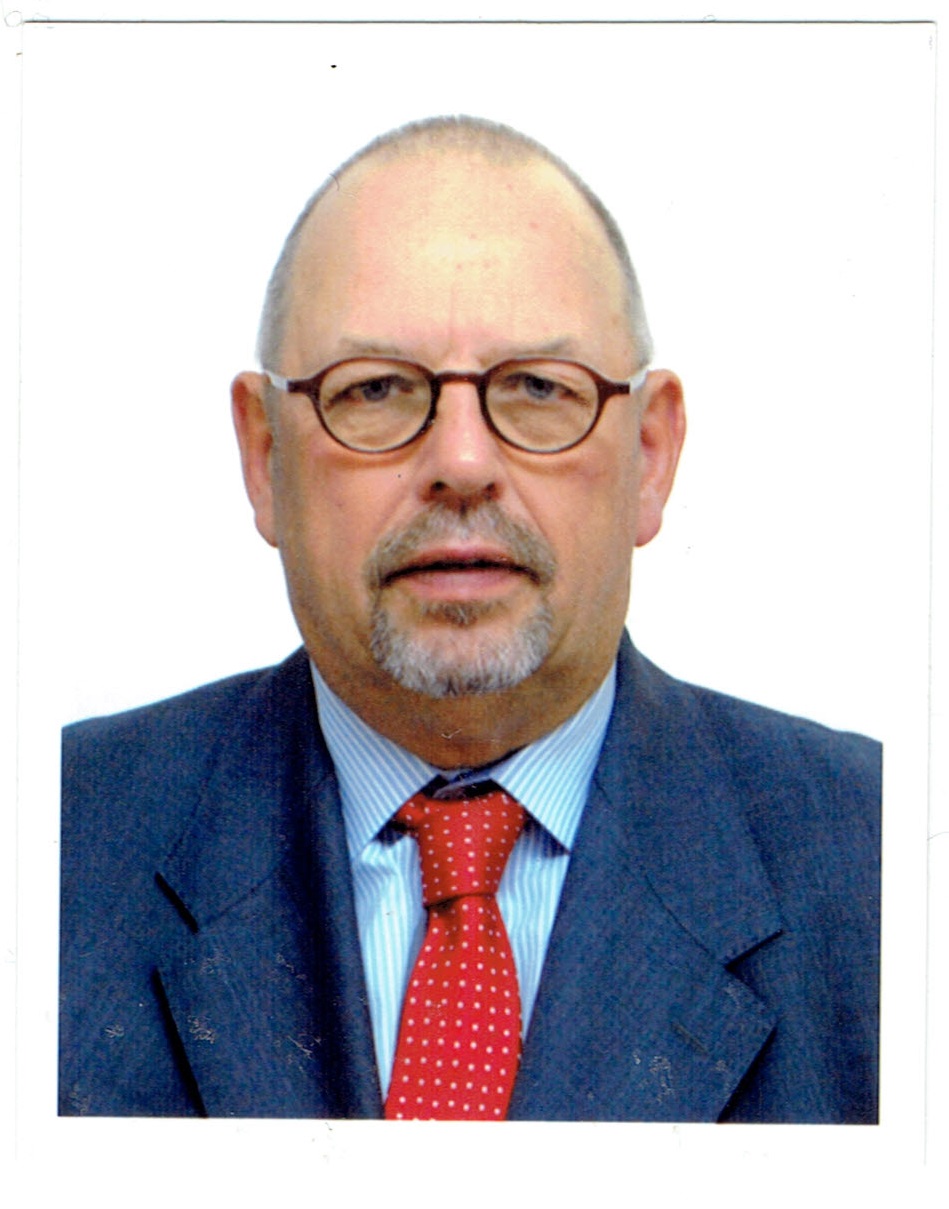
Article by
Jacob Nieuwenhuijze
Jacobus Nieuwenhuijze (CEO, and Founder of LR Consultants) is a senior energy executive with over 40 years of international experience across five continents and more than US$23 billion in successfully executed projects. He specialises in project initiation, concept development, front-end loading (FEL), CAPEX optimisation and project financing, transforming complex concepts into bankable business cases and high performing assets. His experience spans major greenfield and brownfield developments, with a proven track record in technical, commercial and strategic leadership across complex energy and industrial projects. Jacobus’s expertise in complex energy infrastructure projects has evolved into applying “Big Oil” execution rigor to the “Energy Transition”, where he currently leads decarbonisation and low carbon fuel developments, ensuring the next generation of energy assets are built on sustainable principles.
Executive Summary
Energy project feasibility is about more than proving that a technology works. It requires a coherent assessment of technical options, market demand, financial viability, regulatory requirements, risk and execution readiness to determine whether a project represents a credible investment opportunity.
For oil and gas, LNG, refineries and petrochemicals, renewable energy and Power-to-X projects, an integrated feasibility study tests whether the project's assumptions align across disciplines. It identifies critical dependencies, challenges cost and production estimates, examines infrastructure and offtake constraints, and highlights uncertainties that could change the investment case.
This guide explains how to structure an effective feasibility study, compare technical and commercial options, assess project-specific risks and translate findings into actionable recommendations. Key outputs may include an integrated risk register, financial model, design basis and development roadmap towards pre-FEED or FEED.
LR Consultants provides senior-led, independent feasibility study and project advisory support, helping sponsors, investors and project teams turn complex analysis into clear development decisions. The objective is to establish what the evidence supports, what remains uncertain and what must be resolved before committing further capital.
Introduction
For teams assessing feasibility studies for oil and gas, renewables and power to x projects, the key question is whether technical choices, market conditions and delivery plans form a credible investment case. A technically sound concept can still be unfinanceable if, for example, grid access is uncertain, offtake is uncommitted or resource assumptions are weak.
Feasibility brings these issues together before significant capital and development effort are committed. It tests whether the project’s assumptions are consistent across disciplines, exposes dependencies and shows where evidence is incomplete.
This guide explains what an integrated feasibility assessment should test, how its scope changes across oil and gas, renewable energy and Power-to-X, and how findings can support a decision to advance, revise or stop a concept. It also covers the outputs that help investors and project teams act on the analysis, from an integrated risk register and financial model to a development roadmap. The central test is whether the evidence forms a coherent investment and execution case, rather than a set of disconnected reports.
Key Takeaways
- Set the decision, project boundaries and shared assumptions before starting analysis, so every workstream assesses the same project case.
- Test technical choices alongside market demand, offtake, financing, regulation, environmental and social factors, and delivery constraints.
- Tailor the evidence to the project. Oil and gas, renewables and Power-to-X have distinct infrastructure, market and execution sensitivities.
- Use the sequence Define → Assess → Compare → Challenge → Recommend to expose trade-offs and turn uncertainty into decision-ready findings.
- Choose feasibility study consultants for oil and gas, renewables and power to x projects who connect specialist analysis to investment and execution decisions.
What feasibility study consultants assess before an energy project advances
A feasibility study assembles and tests the evidence needed to decide whether a project should advance, which form it should take and what uncertainties must be resolved first. It connects technical options with commercial conditions, delivery requirements and project risks. A general feasibility study overview describes the broad purpose of this analysis. An energy assessment applies it to the specific asset, market and development decision.
Feasibility sits between an early concept and detailed design. A preliminary concept frames a possible solution; feasibility tests whether credible options can meet defined objectives and under what assumptions. Detailed design develops the selected option into a more mature technical basis. The final investment decision belongs to the sponsor or investors. Study findings inform that decision, but do not make it, guarantee success or secure financing.
Why technical feasibility is only one part of project viability
A technology may perform as intended yet remain unsuitable for its proposed location or business case. Assessment needs to connect equipment and process choices with site conditions, resource quality and availability, utilities, infrastructure access, operating requirements and interfaces with existing facilities. A gap in any of these assumptions can affect the preferred configuration and its delivery plan.
Market access and commercial structure matter just as much. The route to market, buyer requirements, offtake terms and exposure to changing prices can alter which option is viable. The assessment should make dependencies visible, distinguish established evidence from assumptions, and identify unresolved questions that could change the decision. Feasibility study consultants for oil and gas, renewables and power to x projects should therefore connect specialist findings rather than present them as unrelated conclusions.
Which energy projects need a tailored feasibility lens?
Project type determines which evidence is decisive. Oil and gas assessments may examine wells, gas processing, liquefied natural gas (LNG), pipelines, storage or industrial utilities. Key questions include whether feedstock and throughput assumptions align with available infrastructure, whether the configuration fits operating conditions, and whether facility interfaces can be executed as planned.
For solar photovoltaic (PV), wind, hydropower and battery storage (BESS), the study must test the resource and site against grid access, connection requirements, operating profile and the project’s route to market. A technically strong generation case may be weakened by constraints on delivering or selling its output.
Power-to-X pathways, including renewable hydrogen, green methanol, ammonia and e-fuels, require assessment across a linked production chain. Renewable electricity, water, conversion technology, utilities, transport and prospective buyers must be considered together. A favourable production estimate alone cannot establish that the product can be delivered and sold on viable terms.
Across these project types, the conclusion should state what the evidence supports, what remains uncertain and what further work is needed before the next development gate. A feasibility assessment reduces uncertainty; it cannot remove it. The sponsor makes the decision, informed by a coherent view of technical, commercial and execution readiness.
How an integrated feasibility study connects technical, market and financial evidence
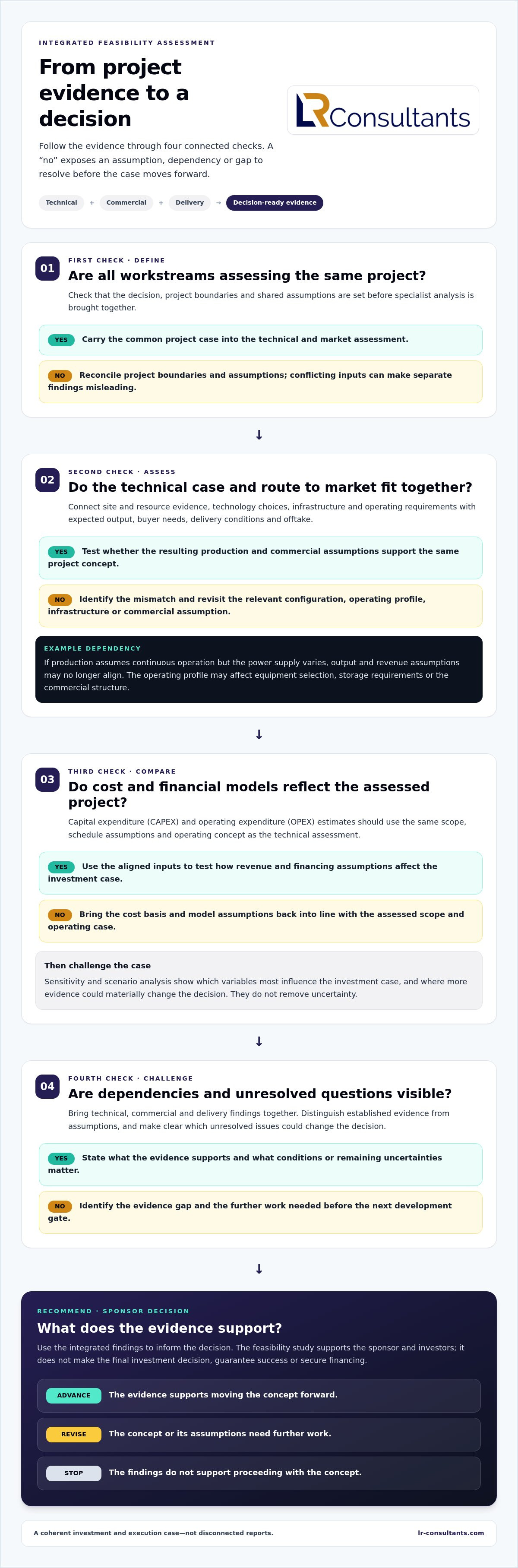
An integrated study tests whether the project’s technical configuration, commercial proposition and delivery plan describe the same viable project. Each workstream should answer a decision question, use traceable assumptions and identify where its findings depend on another discipline. A specialist report may be sound in isolation yet lead to a misleading conclusion if its inputs conflict with the wider project case.
Test the project concept, technology and market assumptions
Technical assessment brings site and resource evidence together with technology options, infrastructure requirements and an preliminary design basis. An energy and production model translates those choices into expected output, utility demand and operating assumptions. The commercial assessment can then test these against the route to market: who will buy the output, what specification or delivery conditions apply, and whether the proposed offtake structure fits the production profile.
For example, if a production case assumes continuous operation but its power supply varies, the mismatch affects both output and revenue assumptions. Revising the operating profile may change equipment selection, storage requirements or the preferred commercial structure. An integrated study makes that chain visible rather than allowing each workstream to use a different view of the project.
Connect financial analysis with risk and execution readiness
Capital expenditure (CAPEX) and operating expenditure (OPEX) estimates should reflect the same scope, schedule assumptions and operating concept used by the technical assessment. Financial and economic modelling then tests how these inputs, alongside revenue and financing assumptions, affect the investment case. Sensitivity and scenario analysis show which variables have the greatest influence and where further evidence could materially change the decision. They do not remove uncertainty or predict a guaranteed outcome.
Execution strategy turns the preferred concept into a credible development pathway. It considers organisational capability, procurement and contracting interfaces, construction constraints, commissioning needs, HSSE, process safety and social requirements. An integrated risk register should connect threats to their causes, consequences, controls, owners and implications for project choices. A constrained utility interface, for example, can inform both the design basis and execution plan.
Legal, regulatory and permitting work also needs to connect with HSSE, social and stakeholder assessment. The study should identify relevant approvals and evidence, potential impacts, affected stakeholders and dependencies that could influence site selection, schedule or design. Feasibility analysis can coordinate legal inputs and show their implications for the investment case. Specialist legal counsel should provide formal legal opinions, drafting and jurisdiction-specific advice.
- Technical and production: Are the design basis, resource assumptions and expected output aligned?
- Market and offtake: Can the proposed product reach a credible market on compatible terms?
- Financial and economic: Do the model inputs reflect the assessed scope and key uncertainties?
- Delivery and risk: Can the organisation manage the interfaces, approvals, safety and execution demands?
For sponsors considering feasibility study consultants for oil and gas, renewables and Power-to-X projects, integration means one coherent evidence base, not simply a bundle of specialist reports. LR Consultants’ integrated project feasibility studies bring specialist inputs into a joined-up assessment focused on actionable development decisions.
How feasibility priorities differ across oil and gas, renewables and Power-to-X
The same assessment framework applies across energy projects, but the decisive evidence changes with the asset and its value chain. Feasibility study consultants for oil and gas, renewables and Power-to-X projects should identify which assumptions could change the selected concept, its route to market or its deliverability. The comparison below highlights typical areas of scrutiny. The scope should reflect the project’s maturity and interfaces.
| Project type | Key feasibility questions | Critical evidence and sensitivities |
|---|---|---|
| Oil and gas | Does the configuration suit the feedstock, product specification, throughput and operating context? Can existing or planned infrastructure support the project? | Gas or feedstock quality and availability; process configuration; pipeline, storage or export interfaces; brownfield constraints; execution sequencing; process safety, HSSE, and social requirements. |
| Renewables | Can the site and resource support the proposed technology and operating profile? Can output be connected, used or sold on workable terms? | Solar, wind or hydropower resource evidence; site conditions; technology options; grid access and connection assumptions; storage or curtailment considerations where relevant; offtake structure. |
| Power-to-X | Can the project convert available energy and inputs into a product that can be transported and sold? | Renewable power profile and supply terms; water and utility needs; conversion pathway; product specification; enabling infrastructure; market demand and credible offtake assumptions. |
Oil and gas feasibility: configuration, interfaces and project context
For oil and gas processing, the assessment tests feed composition, processing requirements and connections to gathering or export systems. An LNG concept adds liquefaction, storage and shipping interfaces; a pipeline case centres on route, capacity, tie-ins and delivery points. Industrial utilities require a clear view of demand and integration with the host facility. In brownfield settings, shutdown windows, live plant interfaces and process safety risks can materially influence configuration and execution choices.
Renewables and Power-to-X: resource-to-product dependencies
Renewable generation depends on the relationship between resource evidence, site conditions, technology selection and the route for using or exporting electricity. For Power-to-X, the chain continues through conversion, product handling and offtake. Green or blue hydrogen, ammonia, methanol and e-fuels are not interchangeable cases: each has distinct process, input, infrastructure and buyer assumptions. A project should test its own pathway rather than rely on a generic conclusion about the sector.
Location specific evidence matters for every development. Access to suitable land, power, water, transport and existing industrial infrastructure can shape the case, but suitability must be established project by project. A useful comparison records not only the preferred option, but also the assumption most capable of changing that preference and the evidence needed to resolve it. This keeps technology selection tied to commercial and execution realities.
How to structure a feasibility study for a clear decision
A decision-ready study begins with the decision, not a predetermined solution. The sponsor should state what must be decided, which options are in scope, what project boundary applies and what evidence would be sufficient to move forward. This gives technical, commercial and risk workstreams a shared basis, while making exclusions and unresolved assumptions visible from the outset.
The Define → Assess → Compare → Challenge → Recommend methodology utilised by LR Consultants provides a practical sequence for conducting project feasibility studies.
Define the decision and study boundaries; Assess each option against agreed requirements; Compare options on a consistent basis; Challenge assumptions, risks and sensitivities; then Recommend a course of action with its evidence and conditions clearly stated.
Scope workstreams and set decision criteria
Study depth should match the question and the project’s maturity. Early concept selection may require enough evidence to distinguish between configurations, while a later assessment may need more developed estimates, interfaces and execution planning. Scope should identify specialist inputs, information owners, dependencies, data gaps and review responsibilities. For example, a production estimate should use the same operating assumptions as the financial model, rather than an independent case.
Agree comparison criteria before assessing alternatives. These may address technical performance, market fit, deliverability, environmental and social considerations, safety, risk and economic value. Criteria should reflect the sponsor’s objectives and be applied consistently. Record the basis for each assessment, including where evidence is incomplete, so the preferred option emerges from analysis rather than unstated bias.
Turn analysis into decision-ready outputs
Outputs should make the evidence usable by project leadership, investors and delivery teams. Depending on the scope, a study may provide:
- An executive feasibility report setting out the decision, options, findings, material uncertainties and recommendation.
- A design basis recording the assumptions and requirements that shape the selected concept.
- An integrated risk register linking material risks to causes, consequences, responses and accountable owners.
- A financial and economic model or investment memorandum presenting the case and its sensitivities for review.
- A development roadmap identifying evidence, decisions and work needed to progress towards Front-End Engineering Design (FEED) or another defined stage.
The recommendation should distinguish what the evidence supports now from what remains conditional. It may advise proceeding, revising the concept, completing targeted work or stopping development. Each proposed next step should address a named uncertainty or decision need, rather than simply add activity.
For feasibility study consultants for oil and gas, renewables and power to x projects, this discipline turns specialist assessments into a traceable basis for sponsor action. The study informs the decision; investment authority remains with the client. Discuss project feasibility study support for a full assessment, targeted workstream or independent review.
How LRC feasibility study consultants support projects from concept to decision
Feasibility support should fit the decision a sponsor needs to make. LR Consultants provides senior-led, independent feasibility studies for energy and renewable energy projects, with recommendations focused on practical development choices. The work can connect technical, commercial, financial, environmental and social, organisational, execution, HSSE, process safety, social and risk considerations in one assessment.
The value lies not only in covering multiple disciplines, but in maintaining a coherent view of how their findings affect the project case. Specialist advisers can contribute defined technical or jurisdiction specific expertise, while assumptions, interfaces and implications are assessed across the study. Formal legal opinions, drafting and jurisdiction-specific advice remain the responsibility of specialist legal counsel.
Choose an engagement model that fits the decision
A full integrated study examines the project case across the agreed scope. A targeted workstream can address a specific evidence gap or decision question, while an independent review can test the logic, assumptions and consistency of existing analysis. The appropriate model depends on what the sponsor already knows, what remains uncertain and which decision is approaching.
Support for investors, lenders or boards provides structured decision evidence, not a substitute for their judgement or investment authority. Where the project is ready to progress, feasibility findings can inform a transition towards Front-End Engineering Design (FEED), helping carry forward the selected design basis, material risks and development priorities. The transition should preserve the reasoning behind key choices, rather than treating the feasibility conclusion as detached from subsequent work.
Use AI-enabled analysis with traceability and human accountability
AI-enabled tools may support speed, consistency and traceability when used within a defined scope and limitations, with confidentiality and data-protection safeguards. Outputs should be traceable to source data and assumptions, then reviewed by qualified professionals for relevance, accuracy and context. This is particularly important when project information is commercially sensitive or proprietary.
These tools can assist analysis, but they are not a substitute for full expert analysis or accountable decision making. They must not make autonomous investment conclusions. The client retains responsibility for the final project decision, informed by the evidence, uncertainties and recommendations presented.
When assessing feasibility study consultants for oil and gas, renewables and Power-to-x projects, sponsors should clarify what is assessed, who provides specialist input, how evidence is challenged and what decision-makers will receive. LR Consultants can tailor the study to a full assessment, a focused workstream, independent review or decision support requirement, coordinating relevant specialist contributions within the agreed scope.
Discuss a feasibility study with LR Consultants to define the decision question, evidence needs and appropriate scope.
Make the next development decision evidence-led
Start by identifying the decision that matters most and the evidence that could change it. Is the priority to select between concepts, resolve a critical uncertainty, test the investment case or define the work required before the next project stage? A precise question helps focus the assessment and keeps development activity tied to a clear purpose.
For sponsors considering feasibility study consultants for oil and gas, renewables and power to x projects, independent analysis makes the basis for action visible: what is supported, what remains uncertain and what must happen next. LR Consultants brings a senior-led, independent perspective to that work, with actionable recommendations shaped around the project’s decision needs.
Discuss a feasibility study with LR Consultants to define the evidence your project needs to advance with confidence.
Frequently Asked Questions
How long does a feasibility study for an energy project take?
There is no single duration that applies to every energy project. A credible workplan depends on scope, project maturity, available evidence, specialist input and the decision to be supported. For work by feasibility study consultants for oil and gas, renewables and power to x projects, the schedule should show when key information is needed, how disciplines depend on one another and when findings will be reviewed. This helps sponsors plan around evidence rather than assume a universal timetable.
Can a feasibility study compare different technologies or project concepts?
Yes, if the options appraisal is included in the agreed scope. For a project considering alternative generation or conversion routes, assess each against the same criteria and use consistent boundaries for output, infrastructure and operating assumptions. Record the strength of evidence behind each comparison. This helps decision-makers distinguish a genuine performance difference from one caused by uneven data, and identify what additional investigation could change the ranking.
Does a feasibility study guarantee that a project will be financeable?
No. A study can test investment-case assumptions, identify gaps and inform development priorities, but it cannot guarantee financing or an investment outcome. A change in market conditions or a counterparty’s position after the assessment, for example, may affect the case. Investors and lenders may also undertake their own reviews. The sponsor remains responsible for the final investment decision and subsequent financing choices.
Can feasibility work assess HSSE and social considerations?
Yes. The agreed scope can examine potential HSSE and social issues, stakeholder considerations and how these may affect project planning and risk. For a proposed site, this could include identifying impacts or stakeholder questions that need further evidence before a development decision. The assessment should be tailored to the project and its context. Applicable standards and jurisdiction specific requirements should be addressed with appropriately qualified specialists.
Does a feasibility study replace pre-FEED or FEED?
No. Feasibility examines whether a concept merits further development; pre-FEED and Front-End Engineering Design (FEED) provide engineering definition at later stages. A useful handover identifies which design assumptions can be carried forward, which interfaces need resolution and what further engineering evidence is required. This allows the next phase to build on the study’s decisions without treating an early design basis as a completed engineering package.
Can AI complete an energy project feasibility study without expert review?
No. AI enabled tools may assist defined analytical tasks, but they cannot replace full expert analysis or provide accountable investment conclusions. Any output derived from project data should be traceable to its sources and assumptions, reviewed by qualified professionals and handled under confidentiality safeguards. The tools’ scope and limitations must be clear, and the client remains accountable for decisions based on the study.
Ready to Test Your Energy Project’s Investment Case?
Before committing significant capital to an energy project, you need confidence that the technical concept, commercial assumptions, financial case, HSSE, social and delivery strategy stand up to scrutiny.
LR Consultants provides senior led, independent feasibility study and project advisory services across upstream oil and gas, LNG, refineries, petrochemicals, renewable energy and Power-to-X projects. We bring technical, commercial, financial, HSSE, social, regulatory, organisational and risk considerations together to help project sponsors identify critical uncertainties, compare development options and establish a credible path forward.
Whether you are evaluating a new project concept, assessing alternative technologies, reviewing an existing feasibility study or preparing for pre-FEED or FEED, we tailor our support to the decisions you need to make.
Start with a conversation about your project.
Tell us where your project stands, what decisions lie ahead and which uncertainties matter most. We will discuss the appropriate scope of feasibility support to help you determine the next steps.


